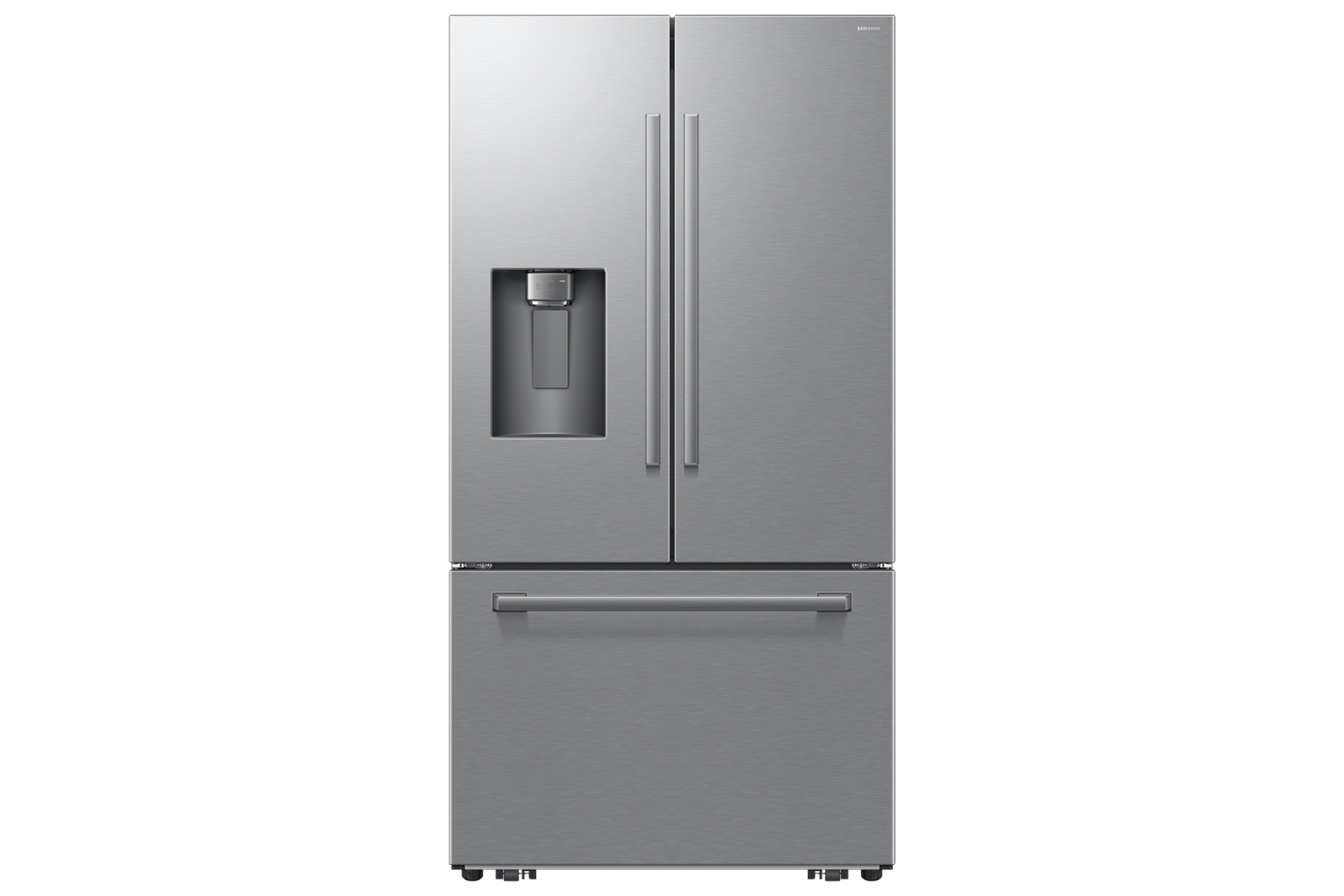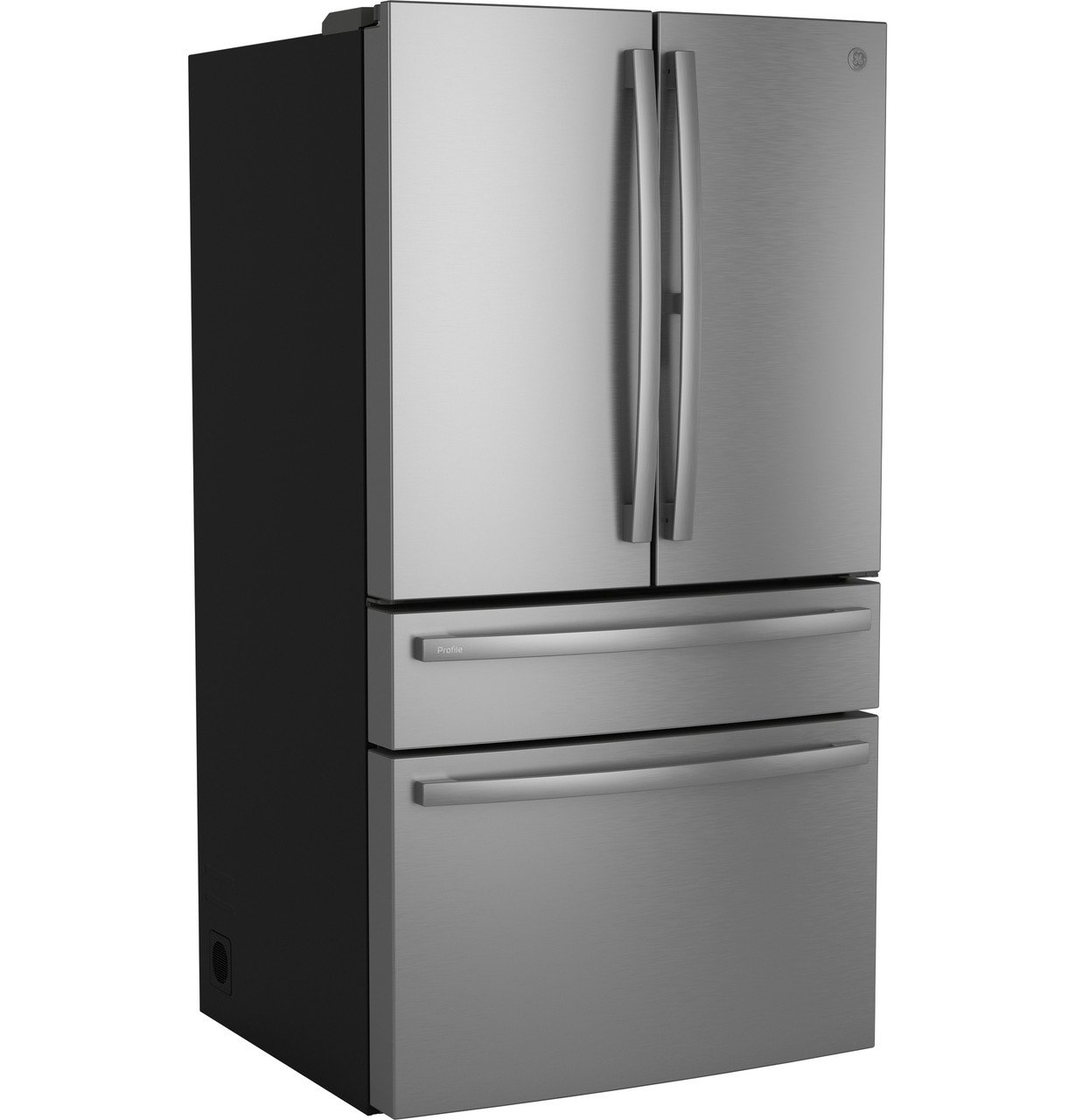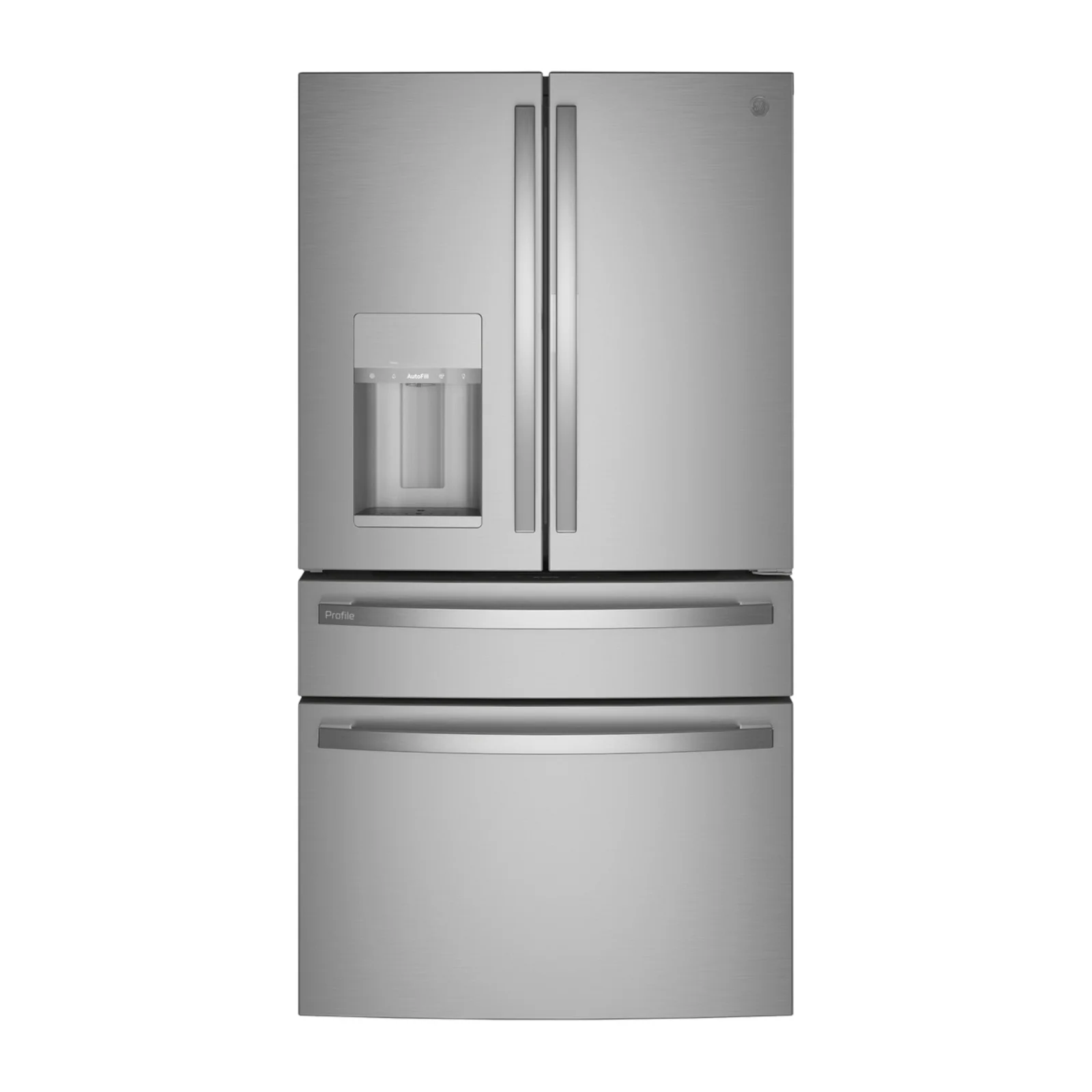
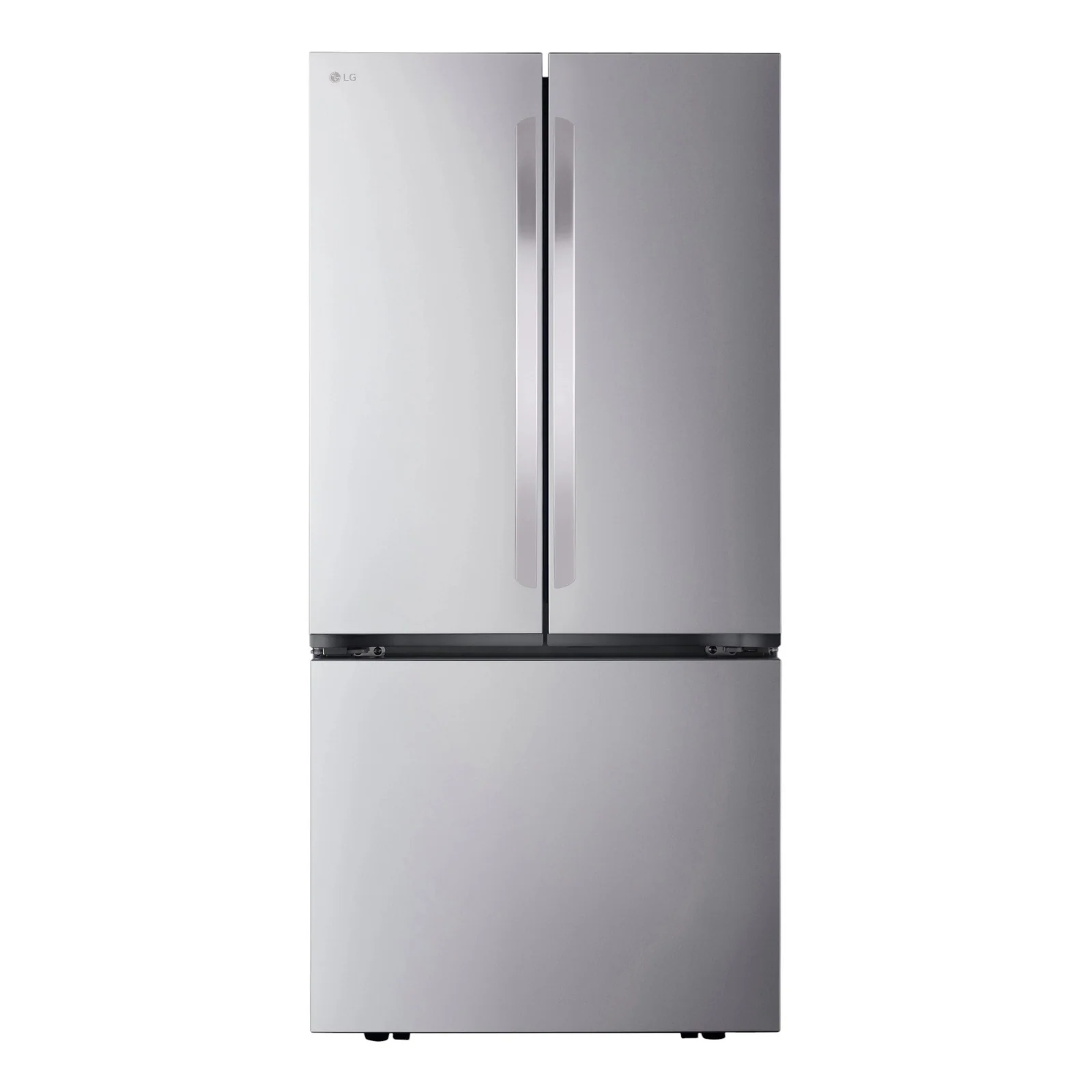
Start with the room, then the refrigerator
A counter-depth refrigerator generally has a shallower cabinet than a standard-depth model, helping it project less into the kitchen. That can matter beside an island or in a walkway used by several people. Standard-depth models often provide more storage for a similar width, but extend farther forward. Neither label guarantees an exact fit. Before comparing finishes or dispensers, measure the available opening and the space in front of it. Sketch nearby walls, cabinets, and the island so you can evaluate both options against the same room.
Read every depth measurement
A specification sheet may list depth without doors, depth with doors, and depth including handles. Those measurements describe different parts of the same appliance. Compare the complete installed projection, not just the smallest number in the listing. The required rear clearance and any connections also affect placement. Doors generally need room to open beyond adjacent surfaces. Counter-depth does not automatically mean a refrigerator can sit completely flush with surrounding cabinetry. Use the specific installation instructions to determine where its cabinet and hinges must sit.
Compare storage with your own containers
A shallower refrigerator may make items at the back easier to see, but the best layout depends on your groceries. Bring the measurements of a large tray, a favorite storage bin, or a tall pitcher and compare usable shelf space. Look at drawer depth, door-bin positions, and the freezer layout. Two models with similar advertised capacity can organize food differently. Consider whether you prefer fewer, deeper shelves or a shallower layout that keeps more items visible during the week.
Test doors, drawers, and everyday movement
Imagine someone opening the refrigerator while another person walks past. Check the space needed for a full drawer extension, and look at how a nearby wall affects the door on that side. Some interior bins need a wider door opening for removal than for everyday access. Review those requirements before assuming the opening is large enough. Tape a temporary outline on the floor to compare projections. This simple exercise can reveal whether the extra storage of a deeper model is worth the space it occupies.
Treat dimensions and capacity as separate decisions
Choosing counter-depth does not eliminate the need to check height and width. Some models compensate for a shallower body through different dimensions or internal layouts. Start a short comparison sheet with installed width, height, depth, required clearances, and fresh-food and freezer capacity. Add the price and any required accessories only after confirming the fit. Avoid a universal clearance rule: the manufacturer’s model-specific instructions should govern. A refrigerator that almost fits can still prevent a drawer from opening or make the kitchen uncomfortable to use.
Bring a complete fit checklist to the store
For a St. Cloud kitchen, the practical choice depends on the room and your shopping habits, not the depth label alone. A frequent cook who stores wide containers may prioritize usable shelf space, while a compact kitchen may benefit from a shallower projection. Bring your measurements, photographs, and delivery-path notes when comparing refrigerators. Ask to see the exact model specifications and opening requirements. Choose the option that preserves the movement you need and accommodates the food you actually store, then confirm the final installation plan.
Further reading
Whirlpool: counter-depth measurements and dimension definitionsWhirlpool: refrigerator sizes and delivery-path measurementsReady to see your options?
Visit 912 13th St in St. Cloud, or call to check availability before the trip.
Talk to the store